 B1/B2 – Negocios y Turismo
 The Real Reasons B1/B2 Visas Get Denied for Hondurans (and How to Avoid Them)
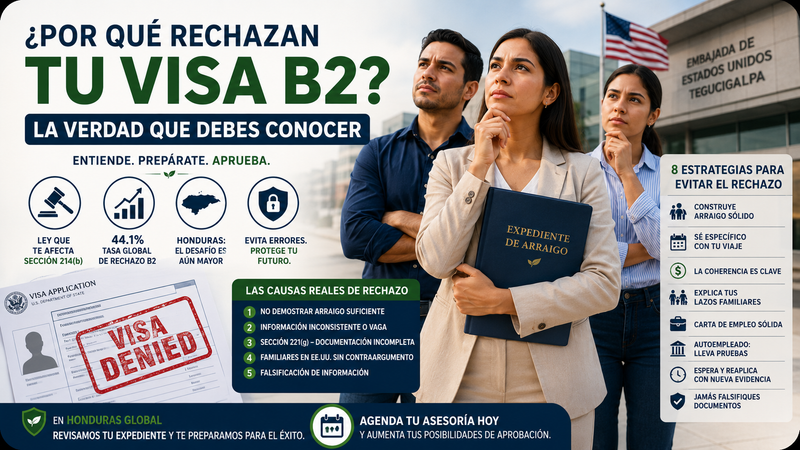
In fiscal year 2024, the global B2 tourist visa refusal rate was 44.1%. For Honduras, as with most of Central America, the challenge is even greater. Understanding exactly why consular officers say "no" — and what you can do to change that outcome — is the most valuable information you can have before your interview.
The law that governs everything: Section 214(b)
The legal framework behind most denials is Section 214(b) of the Immigration and Nationality Act (INA). This section establishes that every non-immigrant visa applicant is presumed to have immigrant intent until they prove otherwise.
This means the burden of proof is on you, not the officer. You must demonstrate that you have sufficient reasons to return to Honduras after your visit. If you don't prove this with concrete evidence, denial is almost automatic.
A 214(b) denial is not permanent — you can reapply — but if you reapply with the same documents and no new evidence, you will almost always get the same result.
The real causes of denial
1. Failing to demonstrate sufficient ties to Honduras
This is the number one reason. The officer is asking: "What's stopping this person from staying in the US?" Your job is to answer that question with evidence, not words.
2. Inconsistent or vague information
If your travel itinerary is vague ("I want to visit the United States"), if your dates don't add up, or if your bank account shows a high balance without explainable income history, the officer will be suspicious.
3. Section 221(g) — incomplete documentation
This isn't always a final denial — sometimes it just means a document is missing. But it delays the process and can result in denial if not resolved in time.
4. US relatives without a counter-argument
Having siblings, parents, or children in the US doesn't automatically disqualify you, but it increases the officer's suspicion about your intent to immigrate. You need clear evidence that your immediate family (spouse, children) is in Honduras.
5. Misrepresentation
A single lie discovered — on the DS-160 or in the interview — triggers a permanent bar under Section 212(a)(6)(C). This includes omitting US relatives or failing to declare prior visa applications.
8 strategies to avoid denial
- Build a ties package. Employment letter with salary and return date, 6 months of bank statements, and any active property or debt in Honduras.
- Be specific about your trip. Cities, hotels with reservations, activities, and exact dates. "Tourism" alone is not sufficient.
- Don't overreach on the itinerary. If your bank shows you can only afford 5 days, don't request 30. Coherence between your finances and travel plan is critical.
- Address your US relatives. If you have family there, bring evidence that your spouse and children live with you in Honduras and depend on you.
- Specific employment letter. Name, position, start date, monthly salary, approved leave, and return-to-work date.
- If self-employed, bring tax declarations (SAR), business registration, and business account statements.
- If denied under 214(b), wait at least 6 months and reapply only with genuinely new evidence — a promotion, a property deed, a new business.
- Never falsify documents. Officers in Tegucigalpa have seen everything. Authentic modest documents are always better than fraudulent "impressive" ones.
At Honduras Global we review your application file before you apply, identify weaknesses, and prepare you for a successful consular interview. Schedule your consultation today.